Ginger: The Root That Traveled the World
Take a moment and think about your kitchen.
Whether you’re preparing a cup of tea, cooking a curry, making a soup, or creating a spice blend, there is one ingredient that quietly appears everywhere. That ingredient is ginger.
It may not always be the star of the dish, but if you remove it, something suddenly feels incomplete.
Have you ever wondered why?
The story of ginger begins thousands of years ago, long before modern trade routes, refrigeration, or food processing existed.
In fact, ginger is believed to have originated in the tropical forests of Southeast Asia before spreading across the world through ancient spice trade networks. Over time, it found a special home in India, where it became deeply woven into culinary traditions, Ayurvedic practices, and everyday life.
Today, India remains one of the world’s largest producers of ginger.
Within India, states such as Kerala, Karnataka, Meghalaya, Arunachal Pradesh, and Odisha contribute significantly to national production. Among these, Meghalaya has emerged as one of the leading ginger-producing states, known for producing aromatic varieties valued in both domestic and export markets.
Globally, countries such as India, China, Nigeria, Indonesia, and Thailand dominate ginger cultivation.
But here’s an interesting question.
If all ginger comes from the same plant, why does some ginger taste sharper, juicier, and more aromatic than others?
The answer lies in maturity.
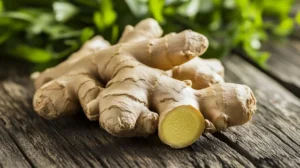
Young ginger is harvested earlier. It has a thinner skin, higher moisture content, and a milder flavor. You’ll often notice it feels smooth and tender when cut.
Mature ginger tells a different story. Its skin becomes thicker, the fibers become more noticeable, and the flavor develops significantly more intensity.
This is the ginger most commonly used in commercial kitchens, spice manufacturing, and dried ginger production.
The next time you’re buying ginger, try observing it closely.
Does the skin look fresh and tight?
Does it feel firm rather than shriveled?
Is the aroma noticeable when lightly scratched?
Good-quality ginger often reveals itself before it’s even cut open.
And that’s exactly why professional buyers spend time evaluating the root itself rather than simply buying by appearance.
Because behind every piece of ginger lies a story of soil, climate, harvesting, and quality.
And that quality can dramatically influence the final dish.
A Thought Before You Leave
The ginger you see in the market may look simple, but its quality can vary enormously.
So how do chefs, exporters, and food manufacturers actually evaluate ginger before purchasing?
In our next blog, we’ll uncover the grading systems, sorting methods, storage practices, and buying parameters that separate ordinary ginger from premium-quality ginger.
www.d-naturals.in / contact@d-naturals.in / +918779003552