
Star Anise in Cooking — Why This Star-Shaped Spice Can Change an Entire Dish
Before we talk about how star anise behaves in cooking, have you ever wondered where this fascinating spice actually comes from? 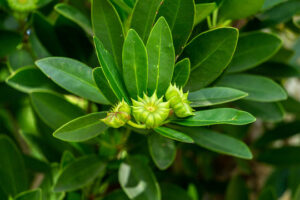
Star anise grows on an evergreen tree that thrives in humid subtropical climates. These trees can take several years before producing fruits, which eventually develop into the familiar star-shaped pods we see in spice markets. The fruits are harvested while still green and are then carefully dried until they develop their reddish-brown color and woody texture.
The harvesting season typically occurs once the fruits have fully formed but before they naturally split open. This timing is crucial because it directly affects the aroma, essential oil content, and overall quality of the spice.
Now here’s something interesting.
The same star anise harvested from different regions, different seasons, and different growing conditions can behave quite differently once it enters a kitchen.
And that’s exactly what makes this spice so fascinating.
Have You Ever Wondered Why Star Anise Tastes Different in Different Dishes?
Let’s imagine two dishes.
A rich biryani simmering slowly on one side.
A delicate herbal tea brewing on the other.
Both contain star anise.
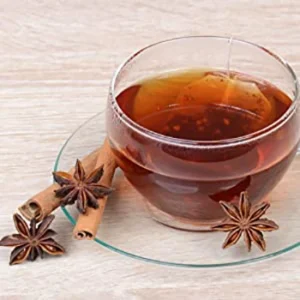
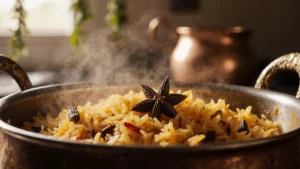
Yet the flavor experience is completely different.
Why?
The answer lies in how star anise releases its essential oils.
When cooked in rich gravies, curries, and biryanis, the spice interacts with fats and other whole spices. This creates deep, warm, and layered flavors.
In soups and broths, the same spice feels softer and sweeter because the flavors disperse gradually through liquid.
In desserts, star anise reveals a surprisingly elegant side of its personality. The natural sweetness becomes more noticeable, creating subtle notes that many people describe as comforting and luxurious.
The spice itself hasn’t changed.
The environment around it has.
And that’s one of the reasons chefs love working with star anise.
So How Much Star Anise Should Actually Be Used?
This is probably the most common question people ask.
And the answer might surprise you.
Less is usually more.
Because star anise is highly aromatic, even a single whole star can flavor an entire family-sized dish.
For most rice dishes, curries, soups, or stews, one whole star is often sufficient.
If you’re preparing larger batches for restaurants, catering, or HORECA operations, the quantity can be increased proportionally, but professional chefs still use it carefully.
Why?
Because excessive star anise can dominate a recipe and create a medicinal or overpowering flavor profile.
Think of it as a supporting actor rather than the main character.
When used correctly, it enhances the entire dish without stealing the spotlight.
Can Star Anise Really Be Used in Desserts?
Absolutely.
And this is where many people are pleasantly surprised.
Most people associate star anise with savory dishes such as biryanis, curries, and spice blends.
But star anise works beautifully in sweet applications too.
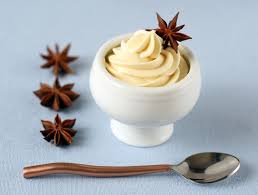
Imagine:
- Poached pears infused with star anise
- Spiced syrups
- Fruit compotes
- Cakes
- Cookies
- Custards
- Hot chocolate
- Herbal teas
The sweet licorice-like notes add depth without making desserts overly sweet.
Many modern pastry chefs use star anise specifically because it adds sophistication and complexity.
In fact, some desserts feel incomplete once you’ve experienced them with a subtle hint of star anise.
How Do Professional Chefs Identify Good-Quality Star Anise Instantly?
Now imagine you’re standing in front of two different batches of star anise.
How would you know which one is better?
Professional chefs often rely on their senses before anything else.
The first thing they look at is shape.
Good-quality star anise usually has:
- Complete stars
- Well-formed points
- Uniform appearance
Next comes color.
Premium-quality star anise often displays a rich reddish-brown tone.
Then comes aroma.
This is perhaps the most important factor.
Fresh star anise releases a sweet, warm, powerful fragrance almost immediately after opening the package.
If the aroma feels weak, dusty, or faded, it often indicates age or poor storage conditions.
Many experienced buyers can judge quality within seconds simply by smelling the spice.
Why Storage Matters More Than Most People Realize
Have you ever opened an old spice container and wondered where the aroma disappeared?
The answer is simple.
Essential oils slowly evaporate when spices are exposed to air, heat, light, and moisture.
Star anise is no exception.
To preserve maximum aroma and flavor, it should be stored:
- In airtight containers
- Away from direct sunlight
- In cool and dry conditions
- Away from strong-smelling ingredients
Many professional kitchens prefer storing whole star anise instead of ground powder because whole spices retain their essential oils much longer.
A properly stored batch of star anise can maintain its aromatic strength for an extended period, making it far more valuable in cooking.
The Real Secret Behind Star Anise
Perhaps the reason star anise has remained popular for centuries isn’t simply because of its shape or aroma.
It’s because of its versatility.
Few spices can move so effortlessly between:
- Savory dishes
- Desserts
- Beverages
- Spice blends
- Professional kitchens
- Home cooking
And even fewer spices can transform a recipe using such a small quantity.
That is the true magic of star anise.
It doesn’t overpower.
It elevates.
Final Thoughts
The next time you spot a star anise pod in a spice blend, a biryani, a cup of tea, or a dessert, pause for a moment.
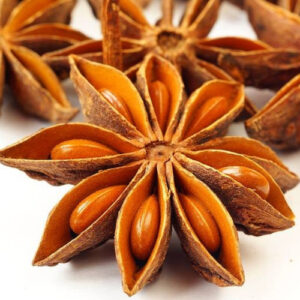
Look at its shape.
Notice its aroma.
And think about the journey behind that small star-shaped spice.
Because sometimes the smallest ingredients create the biggest impact.
Before You Go…
We’ve now explored the origin, quality, grading, aroma, taste, and culinary applications of star anise.
But our spice journey doesn’t end here.
In our next series, we’ll uncover another fascinating spice that is found in almost every kitchen, yet very few people truly understand its grades, sourcing, quality parameters, and professional applications.
Here’s a clue:
🌱 It grows underground.
🌱 It appears in fresh, dried, powdered, and oil forms.
🌱 It is equally respected in culinary traditions and wellness practices.
🌱 And it has been traded across continents for centuries.
Can you guess which spice we’ll explore next?
Stay connected with CHIVES as we continue decoding the stories behind the world’s most influential spices.
www.d-naturals.in / contact@d-naturals.in / +918779003552