In this blog, I will try to explain about how chefs, exporters, and professional buyers identify premium ginger and why quality begins long before it reaches your kitchen.
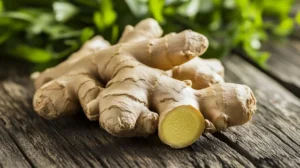
Answer me a simple question…How Do You Know If Your Ginger Is Really Good?
The next time you’re at a vegetable market, standing in front of a pile of ginger, how would you choose the best one? Thinkkk!!!!
Would you pick the largest piece? Yes or No
The cleanest-looking one? Yes or No
Or perhaps the cheapest? Yes or No
What everyone does? Answer is very OBVIOUS!!!
But professional chefs, spice buyers, exporters, and food manufacturers look at ginger very in a very different way.
To them, ginger isn’t just a root.
It’s a flavor ingredient, a quality parameter, and sometimes even a business decision.
Check carefully…You will find that some ginger feels more fibrous than others?
When you cut open two different pieces of ginger and you’ll immediately notice a difference.
One may feel juicy, smooth, and easy to slice.
The other may appear woody, stringy, and full of fibers.
None of them are bad.
They’re simply harvested at different stages.
Young ginger is softer, less fibrous, and contains more moisture. It is often preferred in fresh culinary applications where tenderness matters.
Mature ginger develops stronger flavor, lower moisture, and more fiber. This is the variety commonly used for drying, powder production, spice processing, and commercial cooking.
So next time when someone says, I bought the “best ginger,” the real question becomes:
Best for what purpose?
Do you know how Professional buyers grade Ginger?
Here’s something many people don’t know.
Ginger is graded before reaching food manufacturers, exporters, and large kitchens.
Evaluation by Professional buyers are evaluated on parameters like: What is –
Size and uniformity
Fiber content
Freshness
Aroma intensity
Skin condition
Moisture levels
Presence of cuts or damage
I want you to Imagine, If a company orders ten tones of ginger for a food manufacturing unit and, if every batch tastes different, then the final product will change too.
So consistency is very crucial.
What differentiates Premium grades to Lower grade ginger? IT’S _
Uniform shape
Strong aroma
Healthy skin
Minimal shrinkage
Proper maturity
Whereas Lower grades contain excessive fibers, irregular pieces, or storage-related damage.
So depending on the Use of ginger , decisions are taken…
Do you know what is the Right Way to Store Ginger?
I would like to address a question many households ask.
Should ginger be refrigerated?
The answer depends on how quickly you plan to use it.
If you’re using it within a few days, storing it in a cool, dry place often works perfectly.
However, for longer storage, refrigeration can help preserve freshness.
The mistake many people make is trapping moisture around ginger. Excess moisture encourages spoilage.
Professional kitchens often store ginger in controlled environments where airflow and humidity are carefully managed; Because even the highest-quality ginger loses value when stored improperly.
A Thought Before You Leave
The quality of ginger influences the final flavor of a dish.
But ginger’s importance extends far beyond cooking.
For centuries, this humble root has occupied a special place in traditional wellness systems and modern healthcare.
I want you all to think – Why ginger is so respected by both ancient Ayurvedic practitioners and modern medical researchers?
I will answer to this in my next blog!!!!!. So stay tuned…..
We can be connected on +918779003552 / www.d-naturals.in / contact@d-naturals.in