Cassia Cinnamon — Strength, Reality, and Smart Usage in Today’s Market
If you work with spices—whether as a chef, food brand, cafe owner, or bulk buyer—you already know one thing: consistency matters. And when it comes to cinnamon, Cassia cinnamon is often the quiet backbone behind that consistency.
While Ceylon cinnamon is known as “true cinnamon,” the reality of the global spice trade tells a more practical story. Cassia cinnamon continues to dominate commercial kitchens, industrial bakeries, beverage brands, and seasoning manufacturers—not by accident, but because of its nature, structure, and economics.
Let’s talk about it……..
Understanding Cassia’s Nature
Cassia cinnamon is primarily cultivated in countries like China, Indonesia, and Vietnam. These regions have developed large-scale production systems over decades, making Cassia one of the most traded spice commodities in the world.
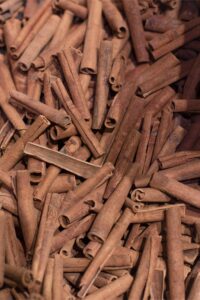
Its bark is thick, hard, and rugged. It forms a strong single curl rather than the delicate layered quills as seen in Ceylon cinnamon. This physical strength reflects its bold and intense flavour.
And in today’s fast-paced food industry, intensity often wins.
The Advantages of Cassia Cinnamon –
One of Cassia’s biggest advantages is its flavour strength. In commercial baking or spice blending, ingredients go through high heat, mixing, packaging, and storage. A delicate spice may fade under such conditions. Cassia doesn’t. It holds its aroma through baking, boiling, processing, and even long distribution chains.
Then there is its cost efficiency. With global supply chains stabilizing after recent disruptions, buyers are extremely price-sensitive. Cassia provides strong flavour at a competitive price point, making it ideal for high-volume operations.
Its shelf stability is another practical benefit. The thicker bark and higher essential oil content allow it to retain aroma for longer periods when stored properly. For distributors and bulk buyers managing inventory cycles, this durability matters.

The supply chain of Cassia is also well-established. From farm-level harvesting to drying, grading, and export, the system is structured for scale. This ensures consistent availability in global markets, something today’s food businesses depend on heavily.
In short, Cassia works well in real-world conditions where production timelines, margins, and logistics cannot be ignored.
The Disadvantages — Where Caution Is Needed
Cassia cinnamon contains higher levels of coumarin compared to Ceylon cinnamon. While moderate culinary use is generally acceptable, excessive daily consumption over long periods may not be ideal. This has led to increasing awareness among health-conscious consumers.
There is also the matter of flavour balance. Cassia is strong—sometimes too strong. In delicate desserts or premium beverages, it can overpower other ingredients rather than complement them. In markets where consumers are shifting toward refined, nuanced flavors, this intensity may not always align with brand positioning.
Another challenge is perception. With growing consumer education and digital transparency, many customers now actively search for “true cinnamon.” This has slightly shifted premium demand toward Ceylon in certain retail and wellness segments.
But in commercial and industrial sectors, Cassia still leads because performance often outweighs perception……
Production and Today’s Market Shift –
In recent years, spice production has adapted to modern demands—traceability, quality grading, moisture control, and export compliance are now non-negotiable.
Cassia farms in Asia follow structured harvesting cycles. The bark is stripped, sun-dried, graded based on thickness and oil content, and then sorted for domestic or export markets. Bulk buyers today demand uniform size, consistent moisture levels, and controlled packaging conditions.
At the same time, buyers are becoming more informed. They are not just asking for cinnamon; they are asking for origin, oil percentage, and processing standards. The market is shifting from commodity buying to knowledge-based sourcing.
This is where understanding Cassia’s nature becomes important. It is a powerful spice meant for robust applications—not for every use.
The Proper and Correct Way to Use Cassia Cinnamon
Using Cassia correctly begins with respecting its strength.

If you are a baker, start with slightly lower quantities than you would expect. Cassia releases a sharp, spicy warmth that intensifies during cooking. It is ideal for cinnamon rolls, spiced cakes, and high-temperature baking where you need the flavour to survive heat.
If you are creating spice blends or masalas, Cassia works beautifully as a backbone spice. It provides structure and depth, but balance it carefully with softer aromatics to avoid dominance.
In beverages like mulled drinks or chai, whole Cassia sticks perform well because their slow infusion releases flavour gradually. Powdered Cassia, on the other hand, delivers immediate impact and should be measured precisely.
For daily personal wellness consumption, moderation is key. Occasional use in teas or meals is different from heavy, long-term intake. Many professionals advise alternating between Cassia and Ceylon depending on purpose.
In commercial kitchens, the right choice often depends on application:
Bold, high-volume production – Cassia Cinnamon
Delicate, premium positioning – Ceylon Cinnamon
The correct use is not about choosing one over the other—it’s about understanding what each is designed for.
A Balanced Perspective
Cassia cinnamon is neither inferior nor superior—it is simply different. It thrives in large-scale kitchens, structured supply chains, and bold flavour profiles. It has supported global baking industries for decades and continues to do so because it performs reliably.
But today’s market demands transparency, education, and informed sourcing. Businesses that understand these nuances build stronger brands and better trust with customers.
At CHIVES™, we work closely with established sourcing networks to supply graded Cassia cinnamon selected for consistent aroma, thickness, and performance. Whether for commercial kitchens or bulk distribution, quality and uniformity remain our focus.
Cassia cinnamon remains a powerful force in the spice world—robust, reliable, and commercially essential. The key lies not just in using it, but in using it wisely.
CHIVES™ supplies carefully sourced Cassia and Ceylon cinnamon to meet the needs of modern kitchens, food manufacturers, and bulk buyers.
Visit www.d-naturals.in to explore our spice range or connect with us +918779003552
Next in the Cinnamon Series
In our upcoming article, we will continue exploring Cassia cinnamon—this time diving into grading standards, oil content percentages, and how professional buyers evaluate quality before making bulk purchasing decisions.
Stay connected as we decode the trade secrets behind one of the world’s most influential spices.